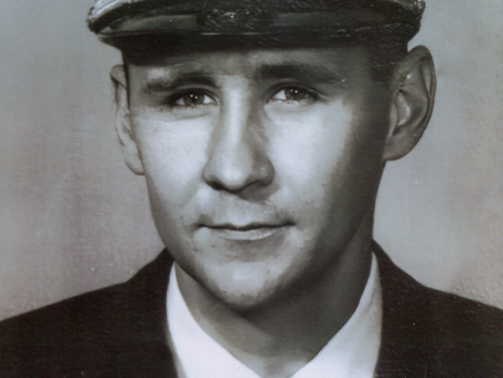
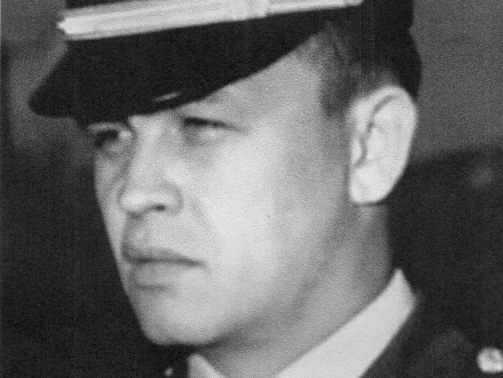
Robert J. McKee, Jr.
Bob was commissioned in the air force the same day he graduated from UNL in January 1966. He completed pilot's training at Reese AFB in Lubbock in a T-37 and was assigned to pilot B-52s. In August 1968, Bob was assigned to conventional bombing missions over Southeast Asia from Guam, Kadena AFB, Okinawa and Utapao, Thailand. He flew over South Vietnam and Laos where it shares a border with N. Vietnam disrupting communications and supply lines along the Ho Chi Minh Trail. Bob returned to the states in 1969 and was trained as helicopter pilot. Bob wrote: "I learned that I could cut down small trees with my main rotor if necessary but keep the tail rotor out of the bushes at all-cost. I learned how to really control the helicopter; we hovered near the top of a tall pine tree with two tassels at the top and he wanted me to remove one tassel and leave the other. I learned to shoot the weapons like the2.75-inch pod mounted rockets and the 7.62 mm pintle mounted mini-gun in each doorway. The rotating barrel was capable of firing up to 4000 rounds per minute. This was going to be a different view of the war than I had from my B-52 cockpit. We were going to insert reconnaissance patrols into Cambodia led by Green Berets and supplemented with various indigenous tribesmen. The training progressed until the day one of our choppers got tangled in some high-tension wires and all on board were lost." Bob's unit was the 20thSpecial Operations Squadron informally known as the Green Hornets with headquarters at Tuy Hoa AFB, South Vietnam. It was the only organization in the Air Force that flew Huey helicopters in Southeast Asia. The actual mission was flown from a Green Beret Headquarters, at Bahn Me Thout well to the west of Tuy Hoa. It was a bare bones outpost covered with very fine red dust that permeated everything. The recon team was six members who would ride in the lead chopper called the ‘slick’ and was armed with M-60 machine guns to minimize weight. Two gunships with the mini-guns would follow. The landing zone was pre-planned. A forward air controller (FAC) would support our mission safe from ground fire at 6000 feet. The choppers would fly at tree-top level directed by the FAC who had the landing zone in sight. As we neared the hole,the FAC would call range so the slick could flare and drop into the hole. The team would run into the tree line while the gunships overflew the hole. The slick would pop up into the #3 position so to the casual observer on the ground 3 choppers came and 3 choppers left. It was a beautiful thing when it worked. If we drew any fire, we would go to a pre-planned alternate. In August 1970, Bob returned home and spent the next 18 years state-side, most at Offutt AFB.